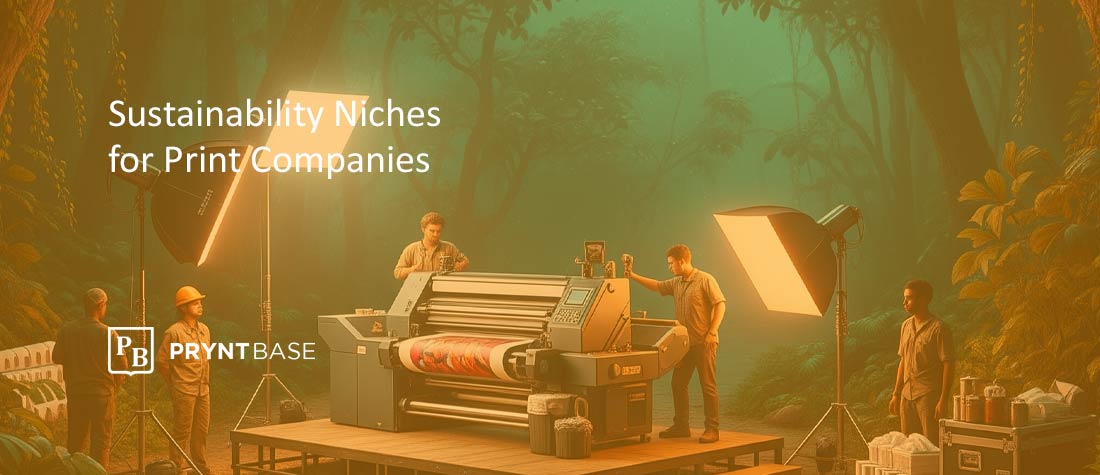
Commercial print is undergoing a transformation. No longer just about color fidelity or turnaround speed, innovation in printing is increasingly being measured by how well a company aligns with environmental priorities. Sustainability is no longer an add-on, it’s a business imperative. The good news? It’s also a growth engine. For print service providers (PSPs) that are looking to future-proof their operations and create standout market positioning, sustainability niches offer real opportunity.
While competitors may greenwash, those who embrace authentic change by investing in eco-print business strategies are positioned to lead in both innovation and trust.
Eco-Friendly Inks Are Evolving Fast
Not all inks are created equal, and clients are starting to ask more questions. Plant-based and water-based inks These are gaining traction fast, especially for food packaging and sensitive product categories. Derived from soy, algae, or even agricultural waste, these inks reduce the reliance on petroleum products and minimize harmful VOC emissions. UV-curable inks with low migration A newer entry into the sustainability discussion, these inks cure instantly under UV light, minimizing energy use during drying and enabling compatibility with more recyclable substrates. Low-migration versions are suitable for primary packaging in food and pharmaceuticals. “If you’re printing packaging or labels, investing in eco-certified inks could unlock access to premium client segments that demand compliance with strict environmental and health standards.”Recycled Substrates Offer More Than Just Cost Savings
Forget the idea that recycled paper is flimsy or dull. Innovations in substrate development have produced high-performance recycled materials that rival virgin stock in texture, color, and durability. Key growth areas:- Post-consumer recycled (PCR) paper and board: Clients in finance, health, and education are actively looking to switch.
- Recycled synthetics: Ideal for waterproof menus, ID cards, and signage. More vendors are introducing substrates with up to 80% recycled content.
- Industrial packaging board alternatives: New blends use recycled corrugate and agricultural fibers to create rigid and high-strength packaging.
Circular-Economy Print Products Create New Revenue Paths
The shift from linear to circular product design opens a new kind of customer conversation. These are not one-off print jobs. They are repeatable, recyclable, or reusable assets that keep clients coming back. Popular circular applications:- Returnable packaging solutions: Durable printed boxes or containers used in closed-loop logistics.
- Reusable event signage: High-quality materials designed for disassembly and redeployment, especially popular in B2B conferences.
- Refillable print products: Think refillable label sleeves, booklet covers, or catalog shells updated with interchangeable inserts.
Low-Waste Workflow Automation Meets Sustainability Goals
Automation is often sold on labor or speed benefits, but it’s also a silent sustainability driver. Prepress automation Reduces paper waste from proofing, minimizes press setup scrap, and avoids last-minute file corrections that result in reprints. Smart imposition software Optimizes layout on press sheets, reducing offcuts and improving substrate efficiency. Digital storefronts and order batching Let customers order in smarter quantities with clear visibility into shipping consolidation and waste savings. “If you’re automating, start tracking waste reduction metrics. Clients in corporate procurement are starting to demand carbon and waste reports from their vendors.”Eco-Print Business Branding is Now a Competitive Differentiator
Most print companies say they care about sustainability, but few build a brand around it. This gap is your opportunity. How to stand out:- Develop a dedicated sustainability section on your website with actual data, case studies, and certifications.
- Offer sustainability consulting as part of your print quoting process.
- Package eco-offerings into bundles (e.g., "Green Launch Kit" for startups or "Sustainable Event Kit" for trade shows).